Egypt- King Menkaura (Mycerinus) and the Queen
 This Egyptian sculpture holds many symbols and details. A symbol is the king and queen show affection, from the queen resting her arm on his, and her other hand is wrapped around him. Their whole bodies are visible and are frontal. One symbol is that both their left feet are forward. A left foot forward meant royalty to the Egyptians in their art. There are small details in the sculpture like their high cheekbones, their garments, all body parts, and their head gear. Their specific head gear was only for royalty. The median used for this Egyptian sculpture was greywacke, according to the Museum of Fine Art Of Boston.
Greece- The Spear Bearer (The Doryphoros)
In this piece, the details of the human body are much more realistic but airbrushed people. I mean airbrushed, that artist showed their people in perfection.This sculpture is by an artist by the name of Polkitos. The median was marble, according to Khan Academy. The sculpture is fit and had defined features. The feet and hands are in motion, showing different muscles. The torso is tilled to show different muscles as well. The muscle body shows athleticism, and strength. The face is detailed and parts are realistic. The lips stand out to me because they are not completely shut. The eyes in this sculpture has no pupils. Not having pupils in your sculpture in Greece was normal. This sculpture is representative of early Greek art history it is meant to show perfection.
Rome-Head of a Roman Patrican
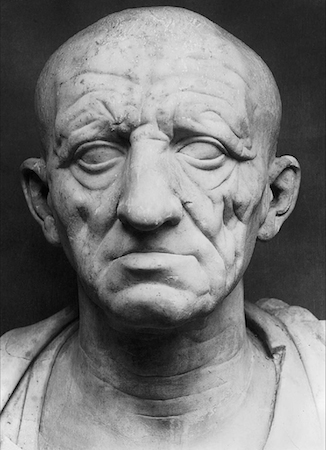
This sculpture is of a older man with many winkles and marks. The median is marble, according to Khan Academy. This man has high cheekbones and looks thin. There are no pupils. Roman art showed flaws and was relate-able to many people. Roman sculptures would sculpt the faces of loved ones that passed away. These artist tried to included every facial characteristic, good or bad.