Content

Friday, November 18, 2016

Cindy Sherman


Cindy Sherman was born in Glen Ridge, New Jersey. She was born on January 19th 1954 (Broad, 2016). Cindy is recognized as one of the best-known and most important artists in the medium of photograph. Her artwork was meant to reflect the world around her. Cindy photographs the real world, and the history and glamour of the cinema and media (Broad, 2016). Common themes in Cindy Sherman’s art is depicting stereotypes of all people, but primarily the stereotypes against women. Depicting women in a different way from past art, gave Cindy the edge to become a large part of the feminist movement that continues today (Krauss 1993).


Cindy Sherman studied in SUNY Buffalo from 1972 to 1976. Cindy began as a painter, b
ut became frustrated at the limitations of mediums that she could express herself on (Rosenberg, 2016)
. Cindy experimented trying a photography class, which she failed. She found her future, and strived and prospered after failing her first photography class.

Some of Cindy Sherman’s influences included her classmates and artists Robert Longo and Charles Clough (Krauss, 1993).


The types of categories art experts put Cindy Sherman in are Conceptual Art, Feminist Art, and Post-Modernism (Burton, 2006). 

Bibliography 

(The Broad, 2016)
The Broad. "Cindy Sherman." The Broad. N.p., 2016. Web. 18 Nov. 2016.
  
(Burton, 2006)
Burton, Johanna, and Craig Owens. October Files. Cambridge, MA: MIT, 2006. Print.

(Krauss, 1993)
 Krauss, Rosalind E., and Norman Bryson. Cindy Sherman, 1975-1993. First ed. New York: Rizzoli, 1993. Print.

(Rosenberg, 2016)
Rosenberg, Bonnie. "Cindy Sherman Biography, Art, and Analysis of Works." The Art Story. Modern Art Insight, 2016. Web. 18 Nov. 2016.

Wednesday, November 9, 2016

Moma Vist


Abstract Art


Abstract art is a piece of art that does not depict a person, place or thing in the natural world. For each artist colors meant something different. Abstract art was about imagination not visualization
Artist: Gerard Schneider
Piece of Art: Abstraction
Made in year 1953
Medium: Aquatint.      
                       
The colors in this piece are supposed to promote emotions and unique thoughts from the individual observing the art. Red is a popular color to show emotions and passion. I think this shows love and is a beautiful piece.

Pop Art

Pop Art began after World War 2. It was cheap to make, because it was manufactured. Pop Art was inspired by current events and icons. Icon's like movie stars, bands and singers. Pop Art artists liked to contort the saturation or brightness. Art's also used comic book figures and animations often. Pop Art was not realism.

Artist: Roy Lichtenstein

Piece of Art: Drowning Girl 
Made in year 1963
Medium: Oil
This piece is very beautiful and specific with the message. The girl is crying and drowning in water. There is a thought bubble like in comic books and it says, "I don't care/ I'd rather sink-- than call Brad for help!" The message is clear that girl would rather drown than call Brad. The woman has defined facial features and you can see she in drowning. 

Friday, November 4, 2016

Modern Movements

Bruce Nauman 

Bruce Nauman is an American artist. He was born in 1941 in Indiana. His art piece Poke in the Eye/ Nose/ Ear, is a slow motion video of a guy in an unusual situation. After the situation the man's reactions are displayed in slow motion. To take a deeper life on human nature. "As you watch an uncomfortable activity you notice the colors and creases in the skin change and the way the shadows move," Bruce Nauman. 
Bruce Nauman's art shows you very invasive art. It makes you uncomfortable, and it is supposed to. He is very direct about the explanations of his art. I think he is interesting in his execution. His style of art is unique. 

Monday, October 17, 2016

Thursday, October 13, 2016

Impressionism and Post Impressionism Art


Impressionism Art


Impressionism began people going outside and painting what they saw in front of them, rather than what they wanted to see like a posed model, or an idea in their head. These paintings were made quickly because of the sifting objects. Many paintings were made about a particular view, to show the differences in perception with light, angles, seasons, and weather. The industrial revolution had created an urban middle class with a taste for relaxing and fashion, and the Impressionist artists documented their lives.


Impressionism artists liked to show social activities. “The Monet Family in Their Garden at Argenteuil,” is by an Impressionism from France named Edouard Manet. The subject of this painting is a family sitting in their garden, surrounded by nature. There are birds and chickens running around, providing implied movement. A man in the background in working on the land, also implying movement. The woman seems to have her back against a tree, while her child lays on her. This painting looks like and everyday event. It also looks like it was done fast because of the layout of the brush strokes, colors and because it looks blurry.


Post Impressionism Art

Post Impressionism believed in a free interpretation of nature. Post Impressionism artists were heavily influenced by other cultures. Cultures included Japanese, other Asian countries, Native Americans, and German. Meaning to look deeper into their view. Artists from this period have been named visionaries, thinkers, and fantastic.  Post impressionists were using paint, the way previous artists sketched. Colors were used to express artist’s emotions rather than to be realistic. 


“A Sunday on La Grande Jatte,” was made by a French Post-Impressionist named Georges Seurat. There is a personal use of color in this painting to portray all the different subjects. The artist used quick and patchy brushstrokes. Seurat also used dabs of paint like dots to unify this painting. This technique of using dots of different color is used from animals, clothing, nature, waters, and faces. This painting is representing a leisure day near the Art Institute of Chicago, Illinois.

Tuesday, October 4, 2016

Baroque and Renaissances Art

Baroque 


This piece of art is, “Ester before Ahasuerus,” by and Italian artist Artemisia Gentileschi. The medium is oil on canvas. This is Baroque art. Main characterizes from Baroque art is exaggerated facial features, a large focus on light and shadows, detailed backgrounds, and the piece is normally large. This piece is 82 x 107 ¾, it is large and almost life size. In this painting the woman is fainting while two girls hold her up, and a man get up from his chair to help her. This painting is asymmetrical. There is something on both sides of the painting, but the woman immediately takes our attention. She is wearing warm colors, and looks distressed. Baroque art showed humans life like, unlike the Renaissances which showed humans god like. Baroque art also focused on light and shadows. Shadows are formed from dresses to background pieces. The background is dark and the tiles become smaller from the end of the painting towards the middle, creating a perspective. Lines from the wall in the background give this piece structure. The artist is famous for perspective paintings. She put many details in small areas, and gave the faces distinct characterizes.


Renaissances

This piece of art is, “Venus and Cupid,” by an Italian artist named Lorenzo Lotto. The medium is oil on canvas. This is Renaissances art. Main characterizes from Renaissance art is that humans were portrayed god like. The biggest characteristic in Renaissance art is that biblical figures or Greek gods were portrayed in it. The woman is Venus the Greek Goddess of love. The boy next to her is her son Cupid, who is known for making people fall in love. He is also known to be foolish since he is a child, and that's why he is peeing through the circle. There is nature in this piece with the tree holding up the curtain, and Venus is laying on a blanket covering grass. Renaissance artist found the human body to be extremely interesting to paint and many famous Renaissance pieces of art are of the nude. The obvious thing that shows this is Renaissances art is that the figure painted is a goddess.

Thursday, September 29, 2016

Design Principals


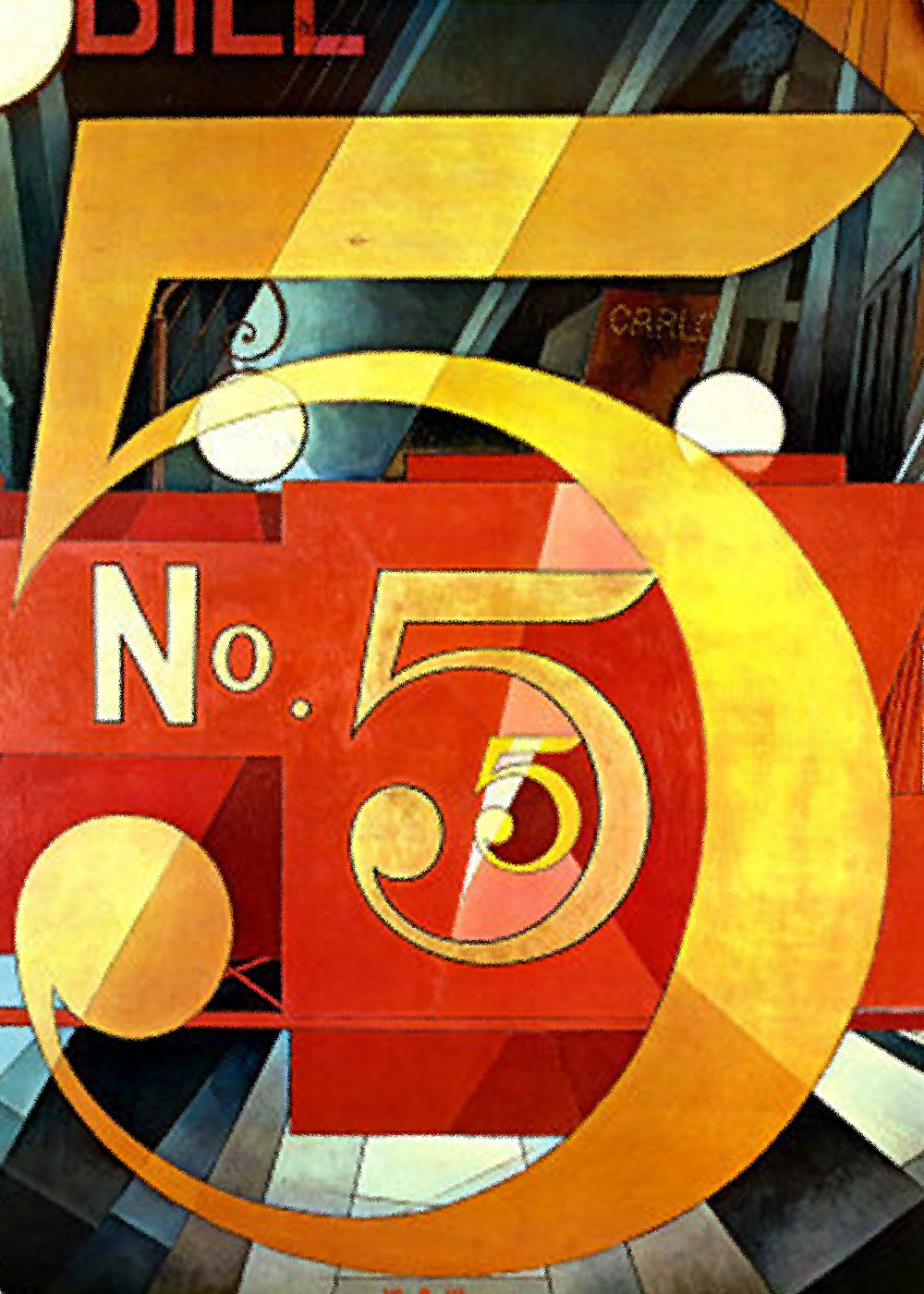
Image result for charles demuth 5

How can artist unify their work?


Artists can unify their work in many ways. I Saw the Figure 5 in Gold by Charles Demuth, shows unity. Charles Demuth used warm colors and geometric shapes to make this piece of art whole. He also uses the number 5 for unity, the 5 gets smaller from the outside to the inside, this made a perspective/ depth. Some parts look like 5s being turned upside down. Unity can also happen by repeating a specific shape.


How can an artist create asymmetrical balance?

An artist can create asymmetrical balance by creating a sense of stability. The left and right are not identical like symmetrical. Asymmetrical balance uses colors, objects and shapes to find balance. Weight is used as well, eyes are drawn to something heavier rather than lighter. A form gathers visual weight as it nears the edge of a picture. Complex forms carry more visual weight than a simple form. Warm colors are heavier than cool colors. In the painting "The Holy family on the steps," by Nicolas Poussin, he designed a complex asymmetrical balance, using different techniques.


How can scale change the meaning of a piece of art?

               Scale can change the meaning in artwork. When something is to scale it is relate-able and almost lifelike. If an artwork is larger than people and exaggerated, it becomes something to spend time looking at in awe. When an artwork is extremely small, it does not take a lot of time to look at it and move on.